
A Short AI Reading List for Leaders
Below are four works on AI of particular interest for executives with organization-level decision making responsibility. Collectively, the works demonstrate why governance must be front and center for leadership when considering AI, why paying attention to issues of governance is a challenge, and cautionary tales of what happens when governance fails.
Each is included in the Manutius curated reading list for leaders in higher education.
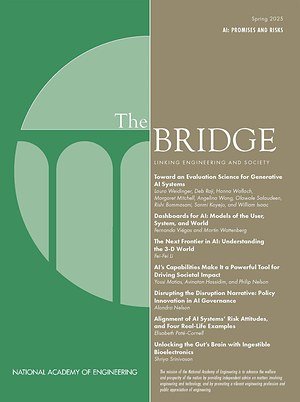
1. The Policy Foundation
In this carefully argued article, Alondra Nelson argues persuasively that governance is not a barrier to innovation—it is the prerequisite for sustainable innovation. This is my top AI-related reading recommendation for anyone in a leadership role. It serves as a vital reminder that governance is, fundamentally, a first-order leadership problem.
Leaders seldom have immediate incentives to prioritize governance structures. In fact, active disincentives often exist, as establishing responsible governance means erecting guardrails that can frustrate stakeholders eager to “innovate.” Incentives aside, Nelson’s piece is a powerful affirmation of why leaders must champion governance despite the hazards.
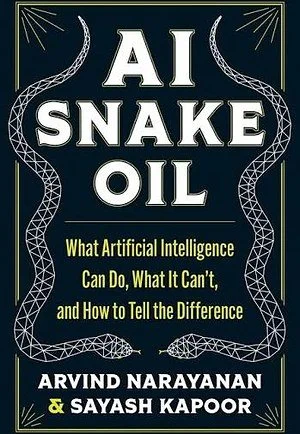
2. The Academic Reality-Check
Arvind Narayanan and Sayash Kapoor, AI Snake Oil. (Princeton University Press, 2024).
Despite the provocative title, the rhetorical posture of this book is genuinely instructive and helpful rather than polemical. Written by two Princeton computer scientists, peer-reviewed, and published by a university press, it stands as a wonderful reminder of the academy’s role as a public good.
If I were chairing an AI Task Force and looking for a single work to build a shared understanding among members, this is the book I would choose. The authors provide a comprehensive map of the broad AI landscape, which served as a needed corrective to my own over-focus on Large Language Models (LLMs) when it comes to AI. Given the ubiquity of these consumer-facing products, I suspect that I am not alone in overweighting the relative importance of LLMs within what is actually a much larger AI environment.
As it turns out, the authors are relatively sanguine about the prospects of LLMs. Their real concerns focus on pervasive, less visible deployments of AI, such as the student success measurement tools already in use on campuses. This of course underscores the potential negative consequences of allowing LLMs to stand in for the entirety of the AI landscape in terms of mental maps, governance, and services.
Also worth attention is the authors’ description of both the supply side and demand side for what they label the “AI Hype Vortex.” What resonated most strongly was their account of the “demand side” of AI hype, in particular how leaders in “broken institutions” seek out AI solutions to address structural challenges that technology alone cannot meaningfully address.
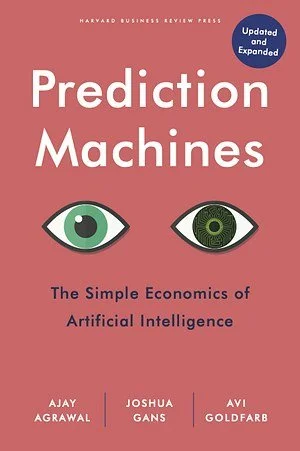
3. The Strategic Framework
While the first two readings establish the need for governance and map the landscape, Prediction Machines provides a practical framework for incorporating AI into organizational strategy and operations.
Writing as economists, the authors view AI through a simple but powerful frame: AI is a tool that dramatically lowers the costs of prediction. (Consider, for example, how real-time machine translation reduced the costs of “predicting” the equivalent word or sentence in another language.)
The authors offer a critical warning not to confuse prediction with judgement. Decision-making requires both. This of course means that as prediction technology becomes cheaper, its output more productive, and its use more commonplace, the premium on human judgement grows, particularly when making consequential decisions with meaningful trade-offs. The chapters in parts three and four are particularly geared to the concerns of executives, with chapters in part three covering topics on workflow and job redesign, and chapters in part four covering risk mitigation and business transformation.
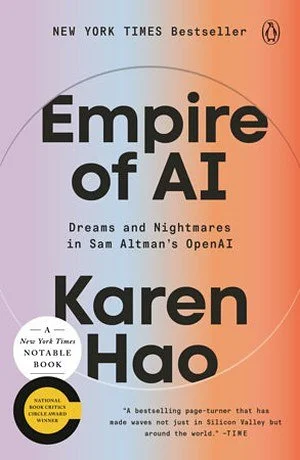
4. The Governance Narrative
Karen Hao, Empire of AI: Dreams and Nightmares in Sam Altman's OpenAI. (Penguin Press, 2025).
This high-profile book deserves the praise it has garnered. It is the only book on this list that I could recommend as a summer vacation read. It may be the best business book by an investigative journalist I have read since Barbarians at the Gate.
Hao writes a fascinating account of the rise of OpenAI, weaving in an account of how the technology developed, how the business environment matured, and what the implications are for public policy, environmentalism, and democracy. Her use of empire and colonialism as a framework to understand the economics of AI is largely persuasive.
Most importantly for leaders, and this is the dimension that most directly speaks to my interests, Empire of AI provides an instructive account of contested governance. It chronicles the friction between OpenAI's original nonprofit mission and its commercial ambitions. The accounts of infighting among the OpenAI Board members, and the OpenAI Board’s disputes with management, provide a sobering cautionary tale of just how difficult — and how necessary — it is to practice responsible oversight.
Summary
We began the list with Alondra Nelson’s scholarly account of the central importance of governance, and we end with Hao’s compelling account of what happens when it fails. For any administrator looking to find the signal through the AI noise, these four works are an ideal place to start.